
1 . An Introduction
Can you describe an orange in an world where only apples exist?
If you look for something, do you open yourself to finding something you are not looking for? (Chocolate)
What language is the Lingua Franca?
How might this affect knowledge?
Does language imbue all knowledge with an inherent bias? (Think how we apply meaning to 'white', 'blue'...)
Is it possible to think or know without language?
Is all 'language' in effect a metaphor?
2. What is Language?
How are metaphors used in the construction of knowledge?
In what ways do values affect our representations of the world, for example, in language, maps or visual images?
In what ways can language be used to influence, persuade or manipulate people’s emotions?
To what extent do the names and labels that we use help or hinder the acquisition of knowledge?
Warm-up reflection: So why is "La Trahison des Images" (Magritte's "Ceci n'est pas une pipe" painting) such brilliant TOK material?
Through his iconic art, painter Magritte lets us explore the relationship between representation and reality. We can indeed use language and symbols to 'map' reality. Within our language, we use words as 'signifiers' to denote something else ('the signified'). But, all too often we blend the signifier with the signified. According to Charles Sanders Peirce, we end up thinking through these signs and we forget what is really out there. Baudrillard takes this notion even further with his conception of 'the hyperreal'. Maps and signifiers (in the broad sense of the word) can be useful as conceptual, organisational, and practical tools. However, when you think through signs, accuracy can give way to simplification. When we blend the signifier and signified, we can also get a distorted understanding of what is really out there.
http://www.tok2022.net/knowledge-and-language.html
https://en.wikipedia.org/wiki/An_Oak_Tree
How is this an Oak Tree?
So what is a chair?
Red Riding Hood - the wolf?
During this programme there was an interesting section discussing how the whales were communicating more.
Is this language? How does their language differ from ours? Does it contain knowledge? How do animals pass on knowledge? eg good nesting sites; how to fly; what is poisonous... Does this require language?
Also:
The effects of other sounds in communication.
The difficulties of a Cheetah that has caught its prey and cannot call its cubs.
Further Research: Audio Niches in Soundscapes
How might the amount of language affect knowledge? - TIK TOK, 24 Hour News, Radio, TV, Internet...
3. Show and Tell
Outline of TOK Assessment: (Essay 66%) and Exhibition (33%)
Outline of Exhibition - a personal object that links to knowledge- specifically to one of the prompts
My Show and Tell: Annouilh's Antigone
4. Summative
Choose your object. (This should already have been done.)
Look at structure on this site.
Give it a go. - with a photograph of your object
Submit to Managebac
If you have not completed by the end of the lesson - then complete and submit by end of the Sunday.
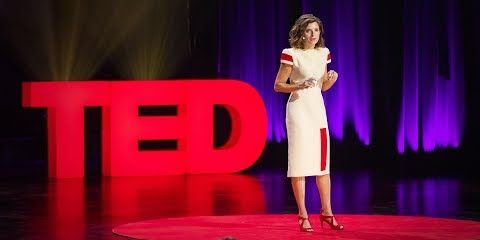 How language shapes the way we think | Lera Boroditsky